Think about the last time you logged into your bank app, email, or social media. Did you just type a password and hit enter? That’s like locking your front door with a rubber band. Anyone who gets your password - through a data breach, phishing scam, or even a guess - can walk right in. That’s why two-factor authentication (2FA) isn’t optional anymore. It’s the bare minimum for keeping your digital life safe. And yes, it’s a pain sometimes. But it’s the difference between someone stealing your identity and them walking away empty-handed.
Some people still think they’re not important enough to be targeted. That’s a myth. Hackers don’t care if you’re a CEO or a college student. They automate attacks. They scan for weak logins. And if your password is reused across sites - which most people do - one leak can take down everything. I’ve seen clients lose access to their PayPal, iCloud, and even their business accounts because they skipped 2FA. One of them even got locked out of his rental property’s smart lock system after his email was hacked. That’s not theoretical. That happened last month in Melbourne.
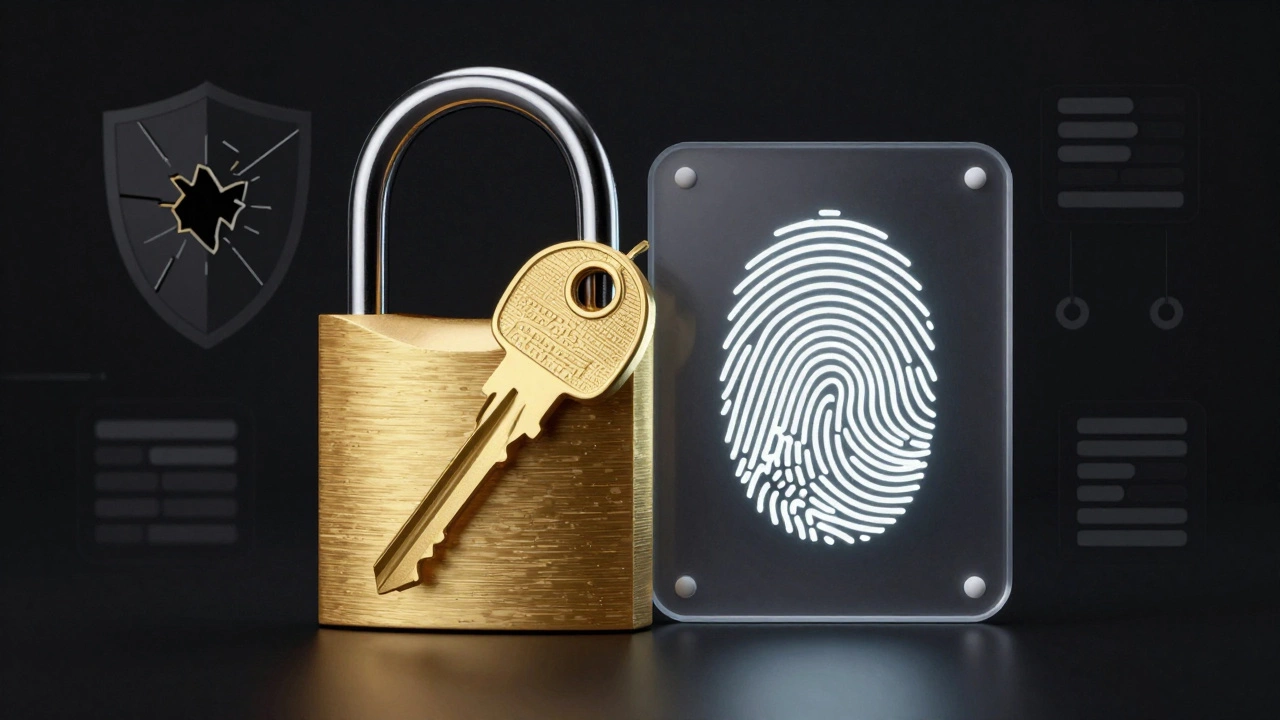
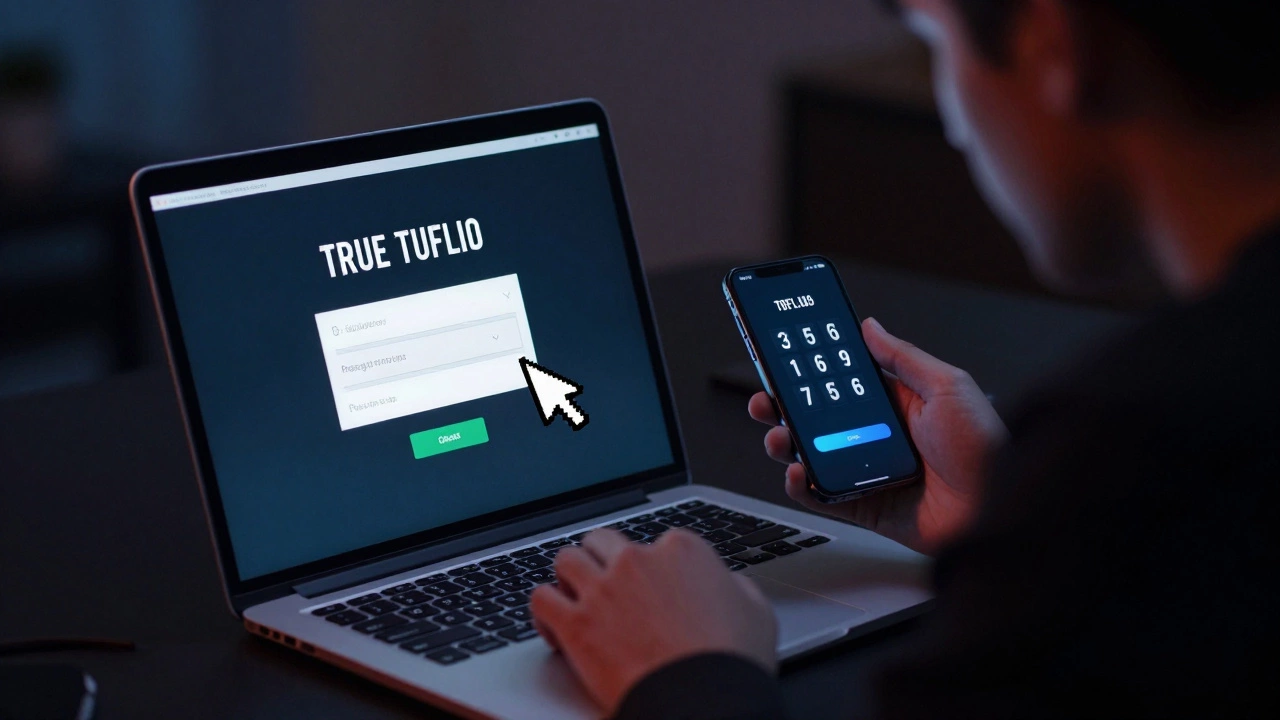
Two-factor authentication adds a second step after your password. It could be a code sent to your phone, a push notification on an app like Google Authenticator or Authy, or a physical security key you plug into your laptop. The point isn’t to make things harder - it’s to make them impossible for someone else to access without physical access to your device or token. Even if a hacker steals your password, they still can’t log in without that second piece. It’s like needing both a key and a fingerprint to open a safe.
There’s a dark side to the online world that most people ignore. Some services - especially those with little oversight - still operate in gray zones. For example, if you’re looking for companionship services in Dubai, you might stumble across sites offering thai escort dubai. These platforms often have terrible security. No 2FA. No encryption. Just a login form that sends your data in plain text. If you ever use a site like that, your phone number, payment details, and even your real name could be exposed in seconds. That’s not just risky - it’s reckless. And it’s exactly why you need 2FA everywhere else, to balance the scales.
How Two-Factor Authentication Actually Works
There are three main types of 2FA: something you know (password), something you have (phone or key), and something you are (fingerprint or face). Most people use the first two. When you turn on 2FA, your account asks for your password first. Then it asks for a code. That code is generated either by an app on your phone or sent via SMS. The app method is better because SMS can be intercepted through SIM-swapping attacks. Hackers trick your phone carrier into transferring your number to a new device, then they get your codes.
Google, Apple, and Microsoft all support app-based 2FA. You download an app like Google Authenticator or Authy, scan a QR code from your account settings, and boom - you’re set. The app generates a new 6-digit code every 30 seconds. Even if someone steals your password, they can’t guess the code. It changes too fast. And if you lose your phone? You can recover using backup codes you saved when you set it up. Always save those. Write them down. Keep them in your wallet. Don’t store them on your phone.
Why Passwords Alone Are Dead
In 2025, the average person has 100 online accounts. Most of them use the same password, or variations of it: “Password123”, “Summer2025!”, “MyDogSpot2025”. That’s not security. That’s a dare. The National Institute of Standards and Technology (NIST) stopped recommending complex password rules years ago because people just write them down or reuse them. Instead, they now recommend long passphrases and 2FA. A password like “correct horse battery staple” is easier to remember and harder to crack than “P@ssw0rd!2025” - but without 2FA, it’s still useless.
Every major breach in the last five years - from LinkedIn to Adobe to the Australian Taxation Office leak - happened because passwords were the only barrier. Hackers used leaked credentials from one site to log into others. That’s called credential stuffing. And it works. A 2024 report from Akamai showed that 78% of login attempts on retail sites were automated attacks using stolen passwords. Two-factor authentication blocks 99.9% of these.
Real-World Consequences of Skipping 2FA
Let’s say you’re a freelancer who uses PayPal and Upwork. You don’t think you have much money in your accounts. But you’ve got your bank details linked. Your client list. Your tax records. Your identity. One breach, and someone could drain your PayPal, transfer money to a crypto wallet, and disappear. Then they use your name to apply for loans or credit cards. That’s identity theft. And it takes months - sometimes years - to fix.
I know a woman in Sydney who didn’t use 2FA on her Gmail. A hacker got in, changed her recovery email, and locked her out. Then they sent fake invoices to her clients, asking them to pay into a new bank account. She lost $18,000 before she even noticed. She had to hire a lawyer, file police reports, and reverify every single account. She still gets calls from debt collectors two years later.
Now imagine that happening to your Netflix account. Annoying. But now imagine it happening to your health records, your super fund, your mortgage portal. That’s not a minor inconvenience. That’s life-altering.
What to Do Right Now
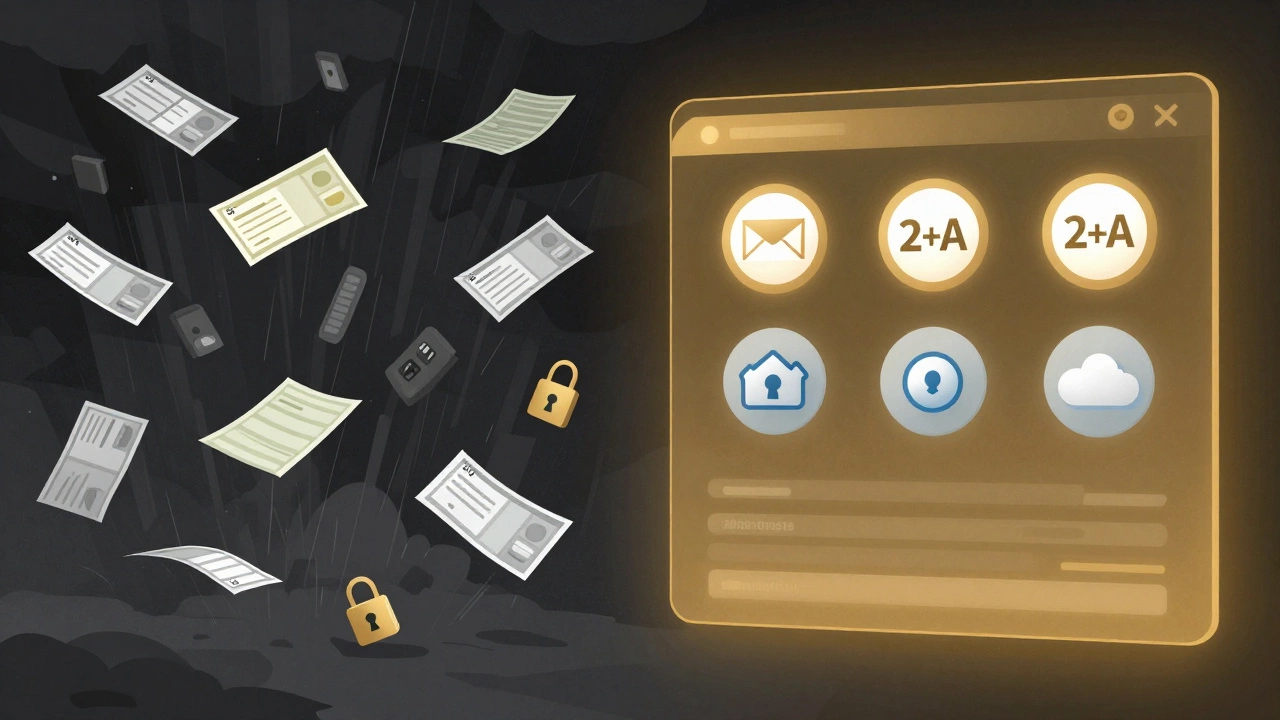
You don’t need to secure everything at once. Start with the big ones:
- Enable 2FA on your email - this is the most important. Your email is the key to resetting every other password.
- Do the same for your bank, PayPal, and any financial apps.
- Then your cloud storage - iCloud, Google Drive, OneDrive.
- Next, social media: Facebook, Instagram, Twitter.
- Finally, your work accounts and any subscription services.
Use an authenticator app, not SMS. Set up backup codes. Write them down. Don’t use the same phone for both your password reset and your 2FA. If your phone dies or gets stolen, you need a backup plan.
And if you’re using a service that doesn’t offer 2FA? Stop using it. Or at least don’t use your real name, real email, or real payment info. There are better options out there. If a company doesn’t care enough to protect your data, why should you trust them with your money or identity?
Myths About Two-Factor Authentication
Some people say, “I’m not a target.” Wrong. You’re a target if you have an account. Everyone is.
Others say, “It’s too complicated.” It’s not. Setting up Google Authenticator takes 90 seconds. You scan a code. You enter a number. Done.
And then there’s the myth: “I use a password manager, so I’m safe.” No. A password manager keeps your passwords secure. But if your device gets infected with malware, or someone gets your master password, they still get in. 2FA stops them cold.
One more: “I don’t want to be locked out.” You won’t be - if you set up backup codes. Every service gives you 5-10 of them when you turn on 2FA. Print them. Put them in an envelope. Store them with your will or important documents. That’s your safety net.
And if you’re still not convinced? Think about this: in 2025, a new law in Australia requires all financial apps to offer 2FA. That’s not because they’re being nice. It’s because the government knows passwords alone are useless. If the law says it, you should too.
There’s a reason why banks, governments, and tech giants all use 2FA. It’s not because they’re paranoid. It’s because they’ve been burned. And they’re not going to get burned again. You shouldn’t either.
And if you’re thinking about using services with zero security - like those offering mature escort dubai - you’re already one step away from disaster. Don’t add insult to injury by skipping 2FA everywhere else.
Here’s the truth: you don’t need to be a hacker to be hacked. You just need to be careless. Two-factor authentication is the easiest, cheapest, and most effective way to stop being careless.
One last thing: if you’ve ever used a site that offers dubai hooker services, you know how easy it is to give out personal info. That’s why you need 2FA more than ever. Protect your real life - not just your online one.